
SANABI vs SAMURAI MAIDEN vs DOOMBLADE: Which Precision Action Game Should You Play in 2026?
Three Steam action games—SANABI: The Revenant, SAMURAI MAIDEN, and DOOMBLADE—each offer tight combat and unique movement. We compare their mechanics, length, and replayability to help you decide which one to buy on Pine…
If you’re craving a pure action fix on Steam in 2026, you’ve got some serious options. The indie and mid-tier scene has been delivering some of the tightest combat and most creative movement systems in years. Three titles that keep popping up in conversations are SANABI: The Revenant, SAMURAI MAIDEN, and DOOMBLADE. All three are available as region-free Steam keys on Pinelicks Vault, and all three put a premium on player skill—but they go about it in very different ways. Whether you want to swing through a cyberpunk city, slash demons in feudal Japan, or wield a sentient blade as a vengeful heroine, this comparison will break down the strengths and weaknesses of each so you can make a confident purchase.
We’ll look at combat depth, movement mechanics, story and atmosphere, platforming precision, and overall value. By the end, you’ll know which game fits your playstyle and budget. And don’t worry—we’ll also point you to related titles like The Mageseeker: A League of Legends Story and Postal if you want to expand your action game library even further. Let’s dive in.

SANABI: The Revenant PC Steam CD Key
Master a chain-hook prosthetic arm to traverse a cyberpunk dystopia and hunt down the mysterious SANABI.
Quick takeaways
- Choose SANABI: The Revenant if you love grappling hook movement, cyberpunk aesthetics, and a high skill ceiling that rewards practice and creativity.
- Choose SAMURAI MAIDEN if you prefer a story-driven hack-and-slash with anime flair, historical settings, and a more traditional combat system.
- Choose DOOMBLADE if you want a fast, chaotic action-platformer with a unique sentient weapon mechanic and strong speedrunning potential.
- All three are available as region-free Steam keys on Pinelicks Vault, so you can mix and match based on your mood—or grab the whole bundle for a complete action game marathon.
Combat Systems: Chain-Hooks, Katanas, and Sentient Blades
SANABI: The Revenant puts a prosthetic chain-hook arm at the center of its combat. You’re not just attacking—you’re swinging, grappling, and pulling enemies into deadly combos. The game demands constant awareness of your surroundings because the hook can attach to almost any surface, letting you zip around arenas and control the flow of battle. It’s a high-skill ceiling system that rewards creativity and quick reflexes. Enemies are varied, with some requiring you to break shields or dodge projectiles while maintaining momentum. The combat feels like a mix of a character action game and a grappling hook simulator, and it’s incredibly satisfying once you get the timing down.
SAMURAI MAIDEN takes a more traditional approach but adds a modern twist. You play as a modern girl transported to Sengoku-era Japan, fighting demons with a katana and ninja allies. The combat is hack-and-slash with a focus on parries, dodges, and special moves unlocked through a skill tree. The game emphasizes stylish combos and crowd control, as you often face groups of enemies. The ninja allies provide support abilities—like ranged attacks or healing—that you can trigger on cooldown. It’s not as movement-intensive as SANABI, but the combat is fluid and satisfying, especially when you chain together perfect parries and finishers.
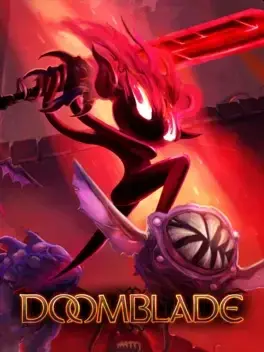
DOOMBLADE is the wildcard. You play as Gloom Girl, wielding the sentient DOOMBLADE, which acts as both a weapon and a platforming tool. The combat is fast and brutal, with the blade allowing you to slice through enemies and even reflect projectiles. The unique mechanic is that the blade can be thrown and recalled, and you can also use it to latch onto surfaces for vertical movement. This creates a combat loop where you’re constantly repositioning and striking from unexpected angles. It’s more chaotic than the other two, but the precision required for platforming carries over into fights, making every encounter a test of spatial awareness.
Movement and Platforming: Swinging vs. Slashing vs. Throwing
Movement is where these three games really differentiate themselves. SANABI is built around its chain-hook. You’ll spend most of your time swinging across gaps, pulling yourself up ledges, and using the hook to gain height. The levels are designed as vertical playgrounds, and mastering the hook’s physics is essential for both traversal and combat. It’s reminiscent of games like Bionic Commando or A Story About My Uncle, but with tighter controls and more combat integration. The learning curve is moderate—expect to die a few times while you get used to the arc of the swing.
SAMURAI MAIDEN keeps movement grounded but agile. You can dash, roll, and perform wall jumps to navigate environments. The platforming is straightforward—no grappling hooks or advanced maneuvers—but the levels are linear with some secret areas that reward exploration. The focus is on combat arenas rather than traversal puzzles, so if you prefer to spend your time fighting rather than swinging, this might be the better pick. Movement feels responsive, and the dodge mechanic has generous invincibility frames, making it forgiving for action game newcomers.
DOOMBLADE blends platforming and combat seamlessly with its sentient blade. You can throw the DOOMBLADE to create temporary platforms, swing across gaps, or pull yourself toward enemies. The blade also has a recall mechanic that can be used offensively or for movement. This creates a rhythm where you’re constantly throwing and recalling the blade, which takes practice to master. The platforming is more puzzle-like than SANABI, requiring you to figure out how to use the blade to reach certain areas. It’s a unique system that feels fresh, but it can be frustrating if you don’t enjoy managing a cooldown-based tool.



Story and Atmosphere: Cyberpunk Dystopia vs. Demonic Feudal Japan vs. Dark Fantasy Vengeance
SANABI: The Revenant tells a story of revenge in a cyberpunk world. You play as a revenant—a resurrected soldier—hunting the mysterious SANABI, a figure responsible for your death. The narrative is delivered through in-game dialogue and environmental storytelling, with a focus on themes of identity and corruption. The art style is a vibrant neon-noir, with rain-slicked streets and towering skyscrapers. The atmosphere is oppressive but beautiful, and the music underscores the tension perfectly. If you love cyberpunk aesthetics and a story that unfolds through gameplay, SANABI delivers.
SAMURAI MAIDEN is lighter in tone, despite the demon-slaying premise. The protagonist, a modern high school girl, is transported to Sengoku Japan and must adapt to her new reality. The story is full of anime tropes—fish-out-of-water humor, unlikely friendships, and a dash of romance. The historical setting is richly detailed, with demonic enemies inspired by Japanese folklore. The voice acting is solid in both English and Japanese, and the cutscenes are well-directed. It’s a more narrative-driven experience than the others, with a linear story that takes about 10-12 hours to complete.
DOOMBLADE is all about dark fantasy vengeance. Gloom Girl is a character straight out of a heavy metal album cover, and the story is minimal—she wants to kill the Dread Lords who wronged her, and that’s enough motivation. The world is a twisted, gothic landscape filled with grotesque enemies and crumbling ruins. The atmosphere is oppressive and grim, with a color palette dominated by blacks, reds, and purples. The story is told through brief cutscenes and item descriptions, letting the gameplay take center stage. If you prefer a game that doesn’t bog you down with narrative, DOOMBLADE is the choice.
Value and Replayability: Which Game Gives You More Bang for Your Buck?
All three games are available as region-free Steam keys on Pinelicks Vault, meaning you can activate them anywhere and start playing immediately. Pricing varies, but they all fall into the budget-to-mid-range category. SANABI offers a campaign of about 8-10 hours, with additional challenge modes and speedrun-friendly level design. The chain-hook mechanics have a high skill ceiling, so replaying levels to improve your time or find secrets adds significant value. It’s a great choice if you enjoy mastering movement systems.
SAMURAI MAIDEN is longer, clocking in at 10-12 hours for the main story. There are optional side missions and collectibles, but the linear structure limits replayability. However, the New Game+ mode lets you carry over upgrades, and there are multiple difficulty levels that change enemy aggression and damage. If you’re a completionist, you can spend another 5-10 hours unlocking all achievements. It’s a solid single-player experience that won’t overstay its welcome.
DOOMBLADE is the shortest of the three, with a campaign around 6-8 hours. But its replayability comes from the leaderboards and time trials. The precision platforming and combat make it ideal for speedrunning, and the developers have added additional challenge rooms post-launch. The game also has multiple difficulty modes that alter enemy placement and platforming hazards. If you like chasing high scores or perfecting your run, DOOMBLADE offers more long-term engagement than its campaign length suggests.
Related picks to open next
View catalog →


Keep browsing the connected catalog
FAQ
Which game has the best combat system?
It depends on your preference. SANABI offers the most innovative and movement-based combat with its chain-hook, while DOOMBLADE blends platforming and combat through its sentient blade. SAMURAI MAIDEN has the most traditional hack-and-slash combat with a focus on parries and combos.
How long does each game take to beat?
SANABI: The Revenant takes about 8-10 hours, SAMURAI MAIDEN about 10-12 hours, and DOOMBLADE about 6-8 hours. Replayability varies, with DOOMBLADE offering strong speedrunning appeal.
Are these games available on other platforms?
All three are available on PC via Steam. SAMURAI MAIDEN and DOOMBLADE also have console versions, but the Steam keys on Pinelicks Vault are region-free and work on PC only.
Can I play these games with a controller?
Yes, all three have full controller support. SANABI and DOOMBLADE are particularly well-suited for controllers due to their precise movement mechanics.